Remember, you said,
“O you lying, disrespectful, disobedient one,
you stole from me!
O you with no self-respect,
you failed your children!
O you, of flawed understanding,
talking to you is like talking to a wall!
O you wrong one, you are erroneous
in every belief!
Are you stupid, or are you pretending?
Is this a game you are playing?”
“Yes, yes! Let’s play a game, I make the rules. You win, I take the blame. You flirt with fire, I burn in the flame. Your wound, my pain.” You change the warp and weft of the dream I weave, … we grieve.
“Yes, yes! Let’s play this game. I plant a garden, you dig it apart. I win, you claim the shame. Matters not, lose or win. The heart hurts and eyes weep, matters not, yours or mine.”
My maternal grandfather, Abdul Majeed Khan, was one of the engineers involved in the construction of Sufia Masjid.
Named after the Naqshbandi Sufi saint Hazrat Mawlana Ziauddin Farooqi, the Masjid was built by the order of Nawab Sultan Jahan Begum. Completed in 1905, the Masjid’s simple architecture is a blend of Islamic and European styles. The two green domes are covered in green tiles and the prayer hall is decorated with Belgium crystal chandeliers. The Masjid compound hosts a garden with fountains, ablution Hauz (pond) and a grave yard. The royal family used to pray here. Nawab Sultan Jahan Begum and her son, Nawab Hamid Ullah Khan,the last ruler of Bhopal are buried in this graveyard. The resting place of the sufi saint, Mawlana Ziauddin, who died in 1829, is also here. This Masjid was previously known as Ziauddin Tekri. Mawlana Ziauddin Sahib was the student of Mawlana Abu Lais who was a student of Shah Waliullah (Quddissirruhu)
Remember when you taught me to darn?
You drew a thread from the weave of the fabric,
“This is the best yarn, it doesn’t show.”
Skillfully you sewed the hole.
It closed nicely just like you said,
“Brand new now, almost!”

Remember the blue dress you sewed?
I wore it with matching blue sandals when I was five.
“You look like the blue fairy!”, you smiled.
That clever blue fairy,
the heroine of all your stories!
I drew a thread from that moment.
It is the best yarn, it doesn’t show.
One by one, I patched my wounds.
They closed nicely just like you said,
“Brand new now, almost!”
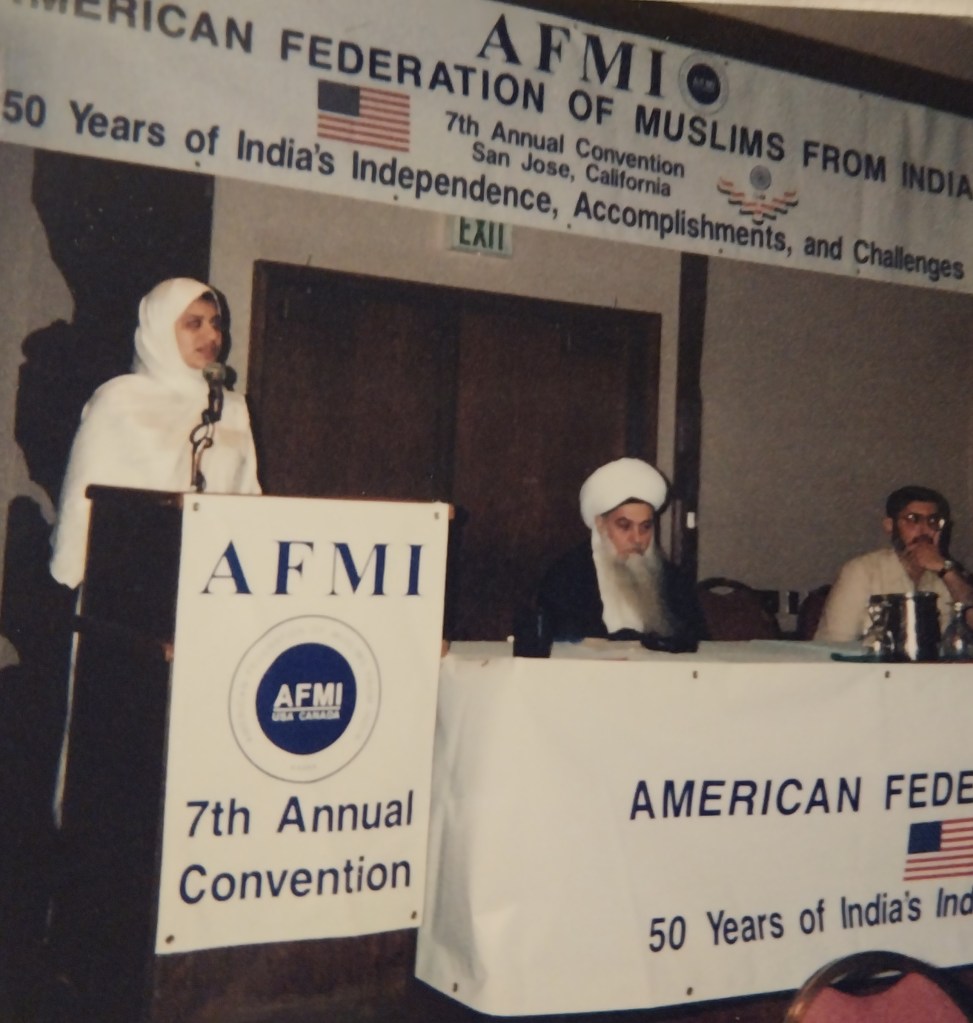
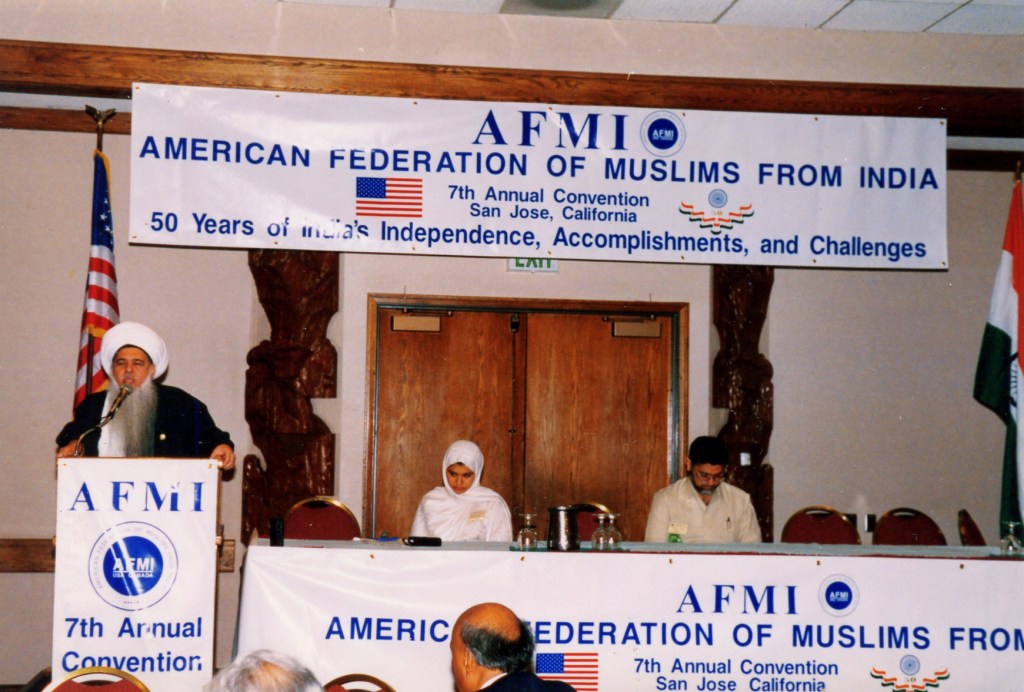
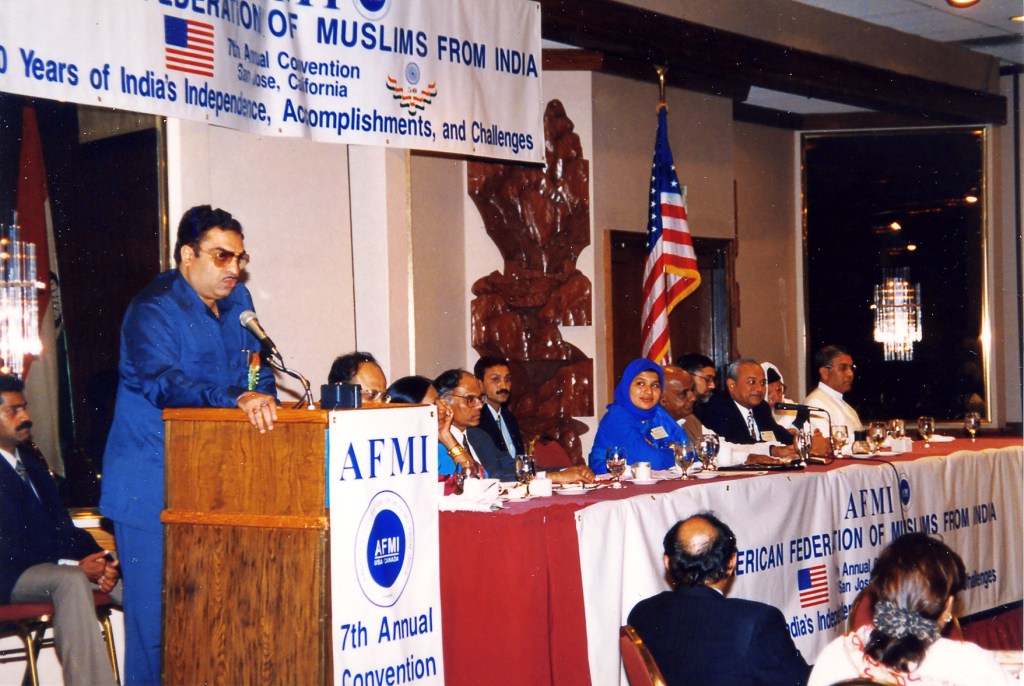
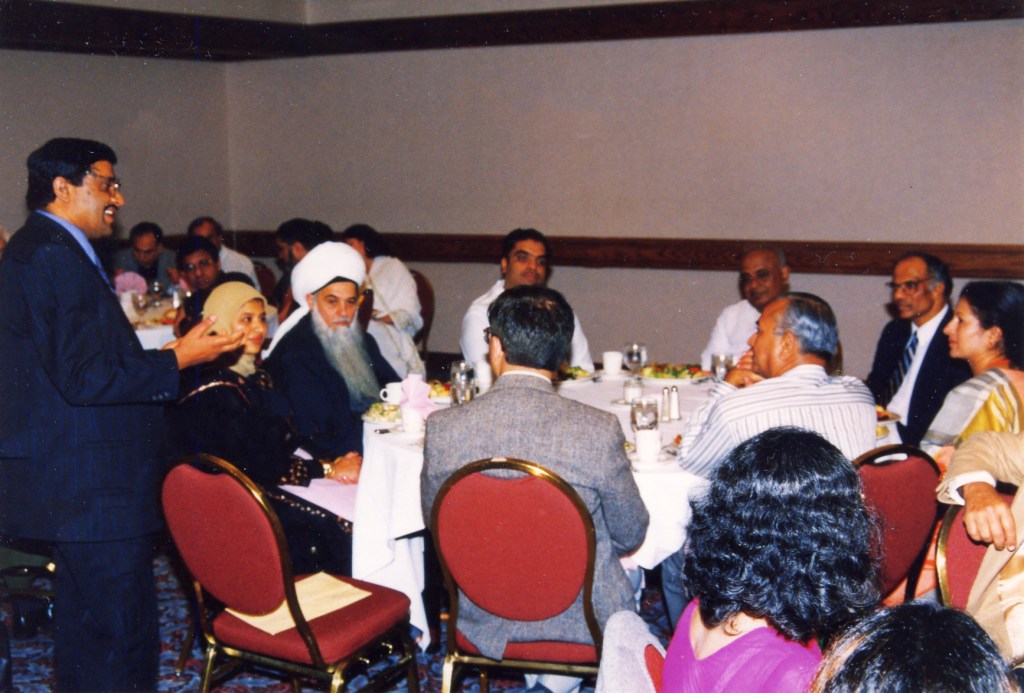
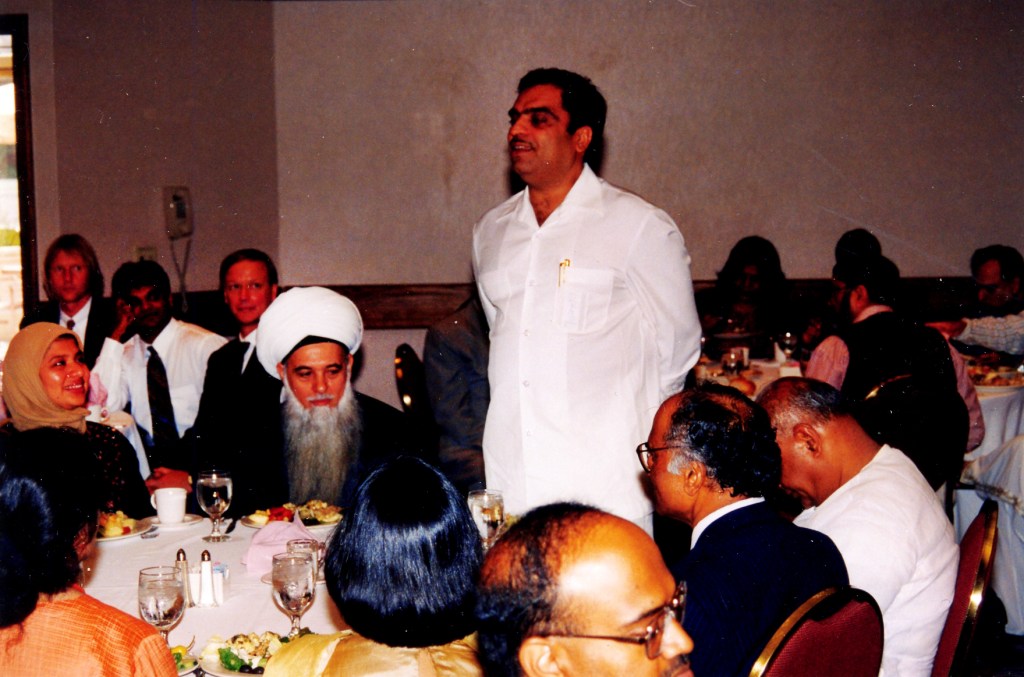
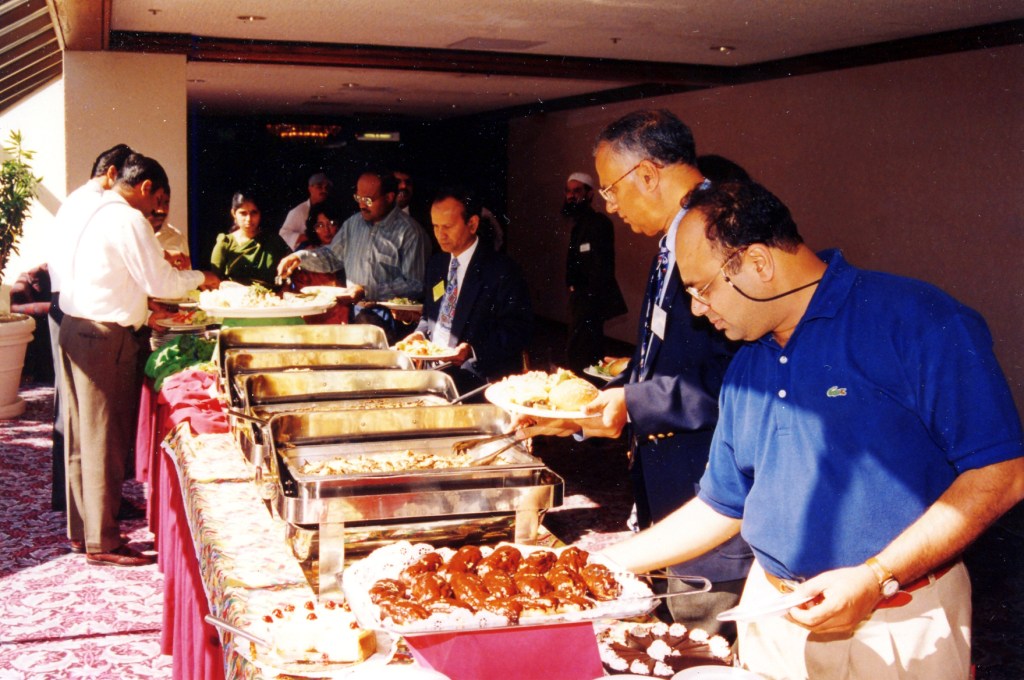
Inaugrating the convention on October 11, 1997 at 7:00 am, Double Tree by Hilton, San Jose, California.
As chairwoman of the seventh Annual Convention of the American Federation of Muslims from India, after declaring the conference open, I asked the attendees to ponder if the ideals the freedom fighters fought for, and Tagore sang for, had been achieved in the fifty years of an independent India?
Tagore’s Gitanjali 35 Where the mind is without fear and the head is held high Where knowledge is free Where the world has not been broken up into fragments By narrow domestic walls Where words come out from the depth of truth Where tireless striving stretches its arms towards perfection Where the clear stream of reason has not lost its way Into the dreary desert sand of dead habit Where the mind is led forward by thee Into ever-widening thought and action Into that heaven of freedom, my Father, let my country awake.
Then, invited our beloved Mawlana Shaykh Hisham Kabbani to the stage for a beautiful recitation of the Quran Majeed which left the entire audience in awe.
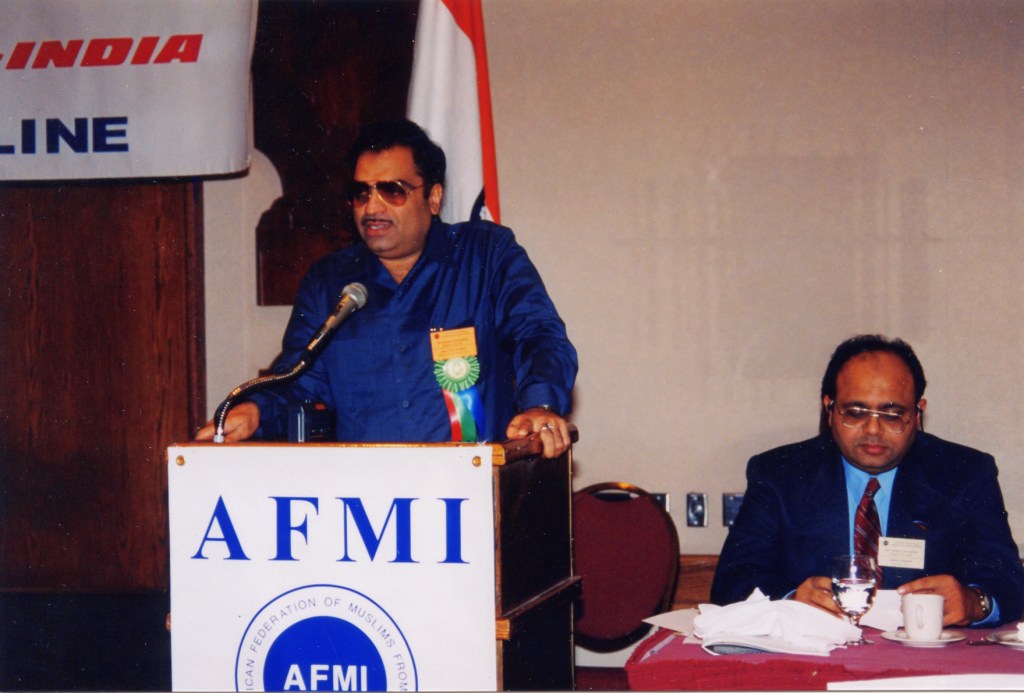
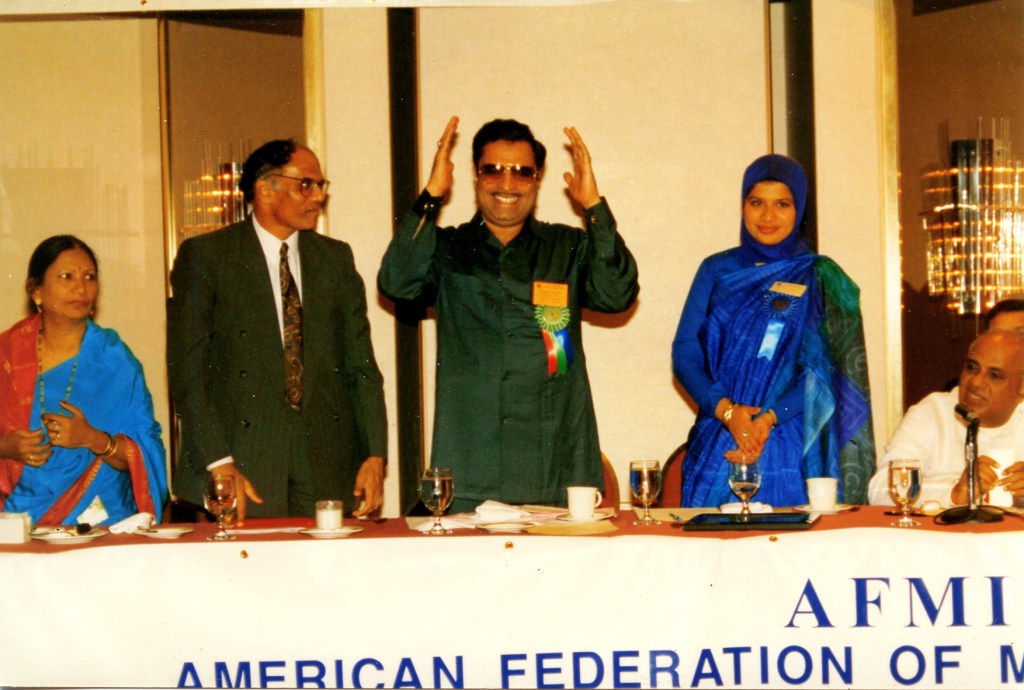
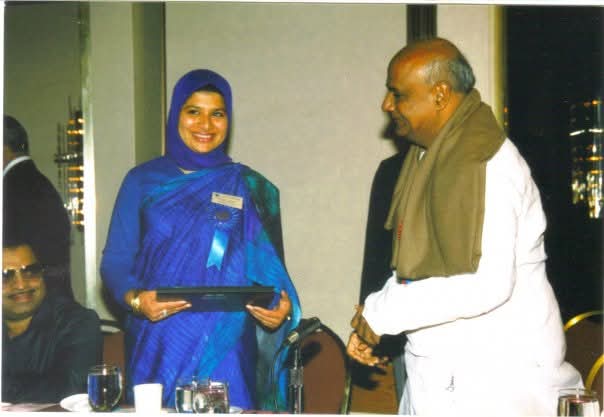
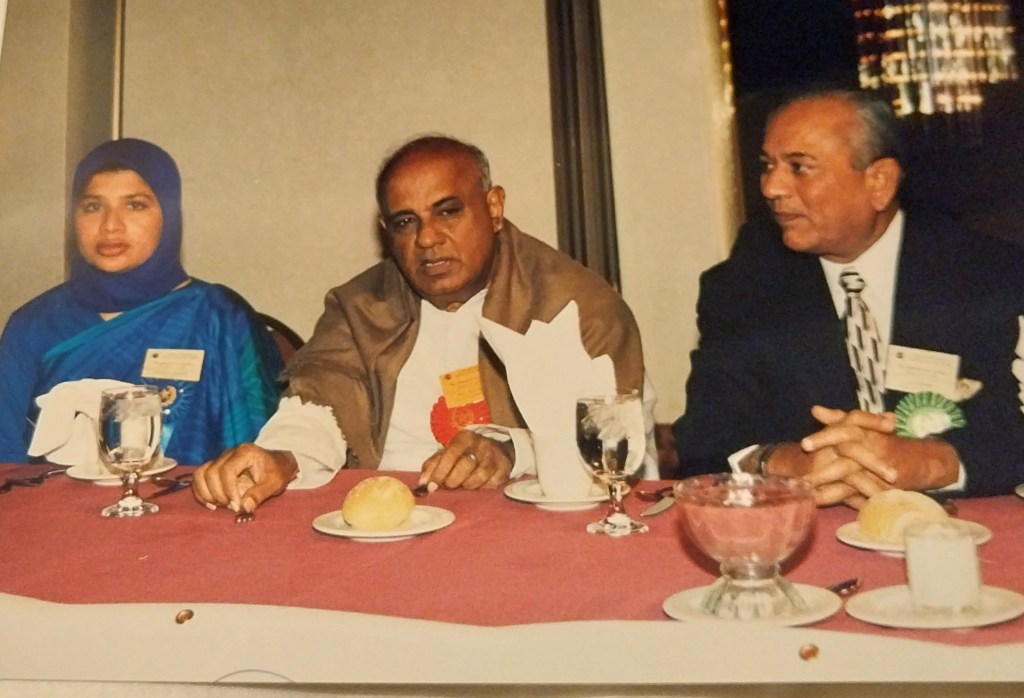
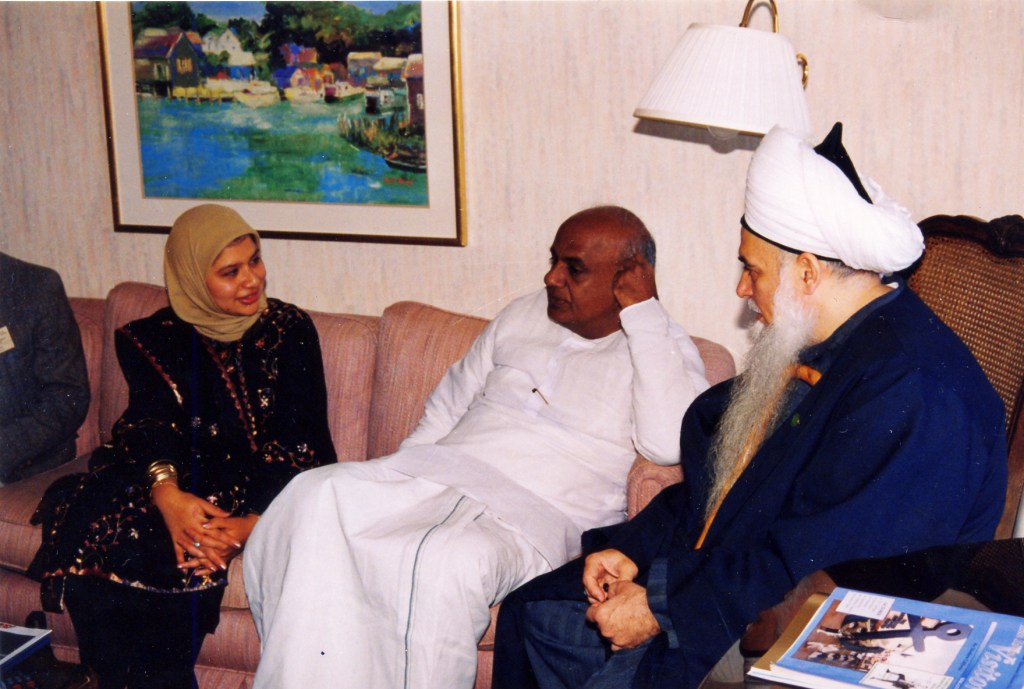
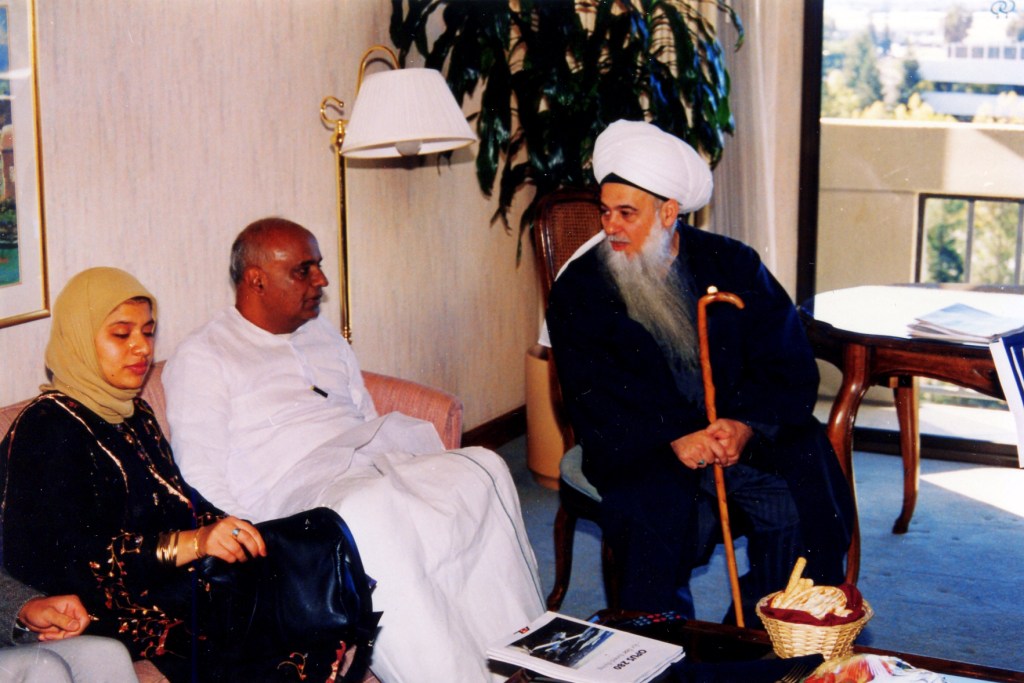
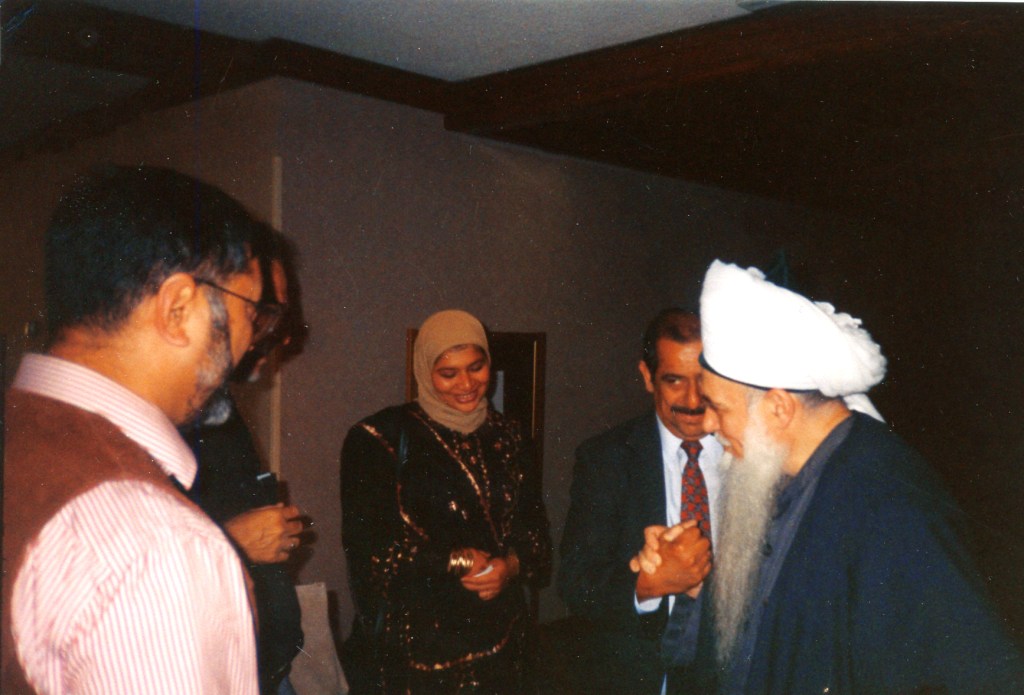
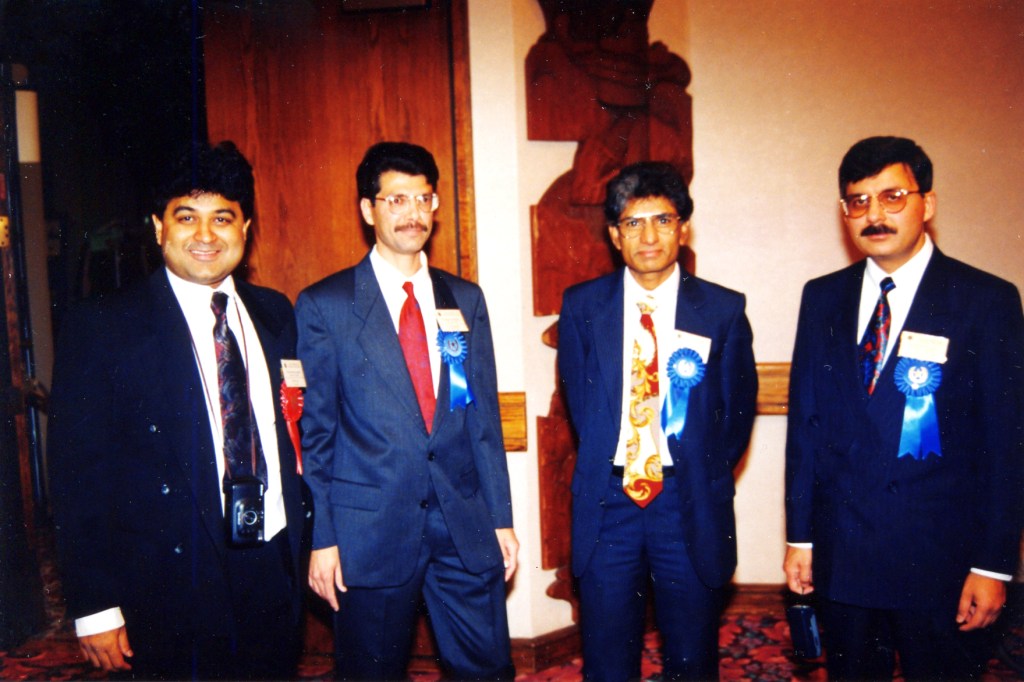
The most heavenly recitation of the Quran ul Kareem by His Holiness, Syedna wa Mawlana Shaykh Hisham Kabbani.C.M. Ibrahim, civil aviation minister of India and Dr. Aslam Abdullah.Left to right: Consul General of India (and wife), San Francisco, Civil Aviation Minister of India, C. M. Ibrahim, Simala Kureishy, His Excellency Deve Gowda, ex-Prime Minister of India.Dr. Muzammil Siddiqi receiving an award from His Excellency Deve Gowda ex- Prime Minister of India.Dr. Abidullah Ghazi, author, educator and poet, executive director of IQRA International Educational Foundation.Left to right: Simala Kureishy, His Excellency Deve Gowda ex- Prime Minister of India, Dr. A. R. Nakadar, general secretary AFMI.Speech by Dr. A. R. NakadarSpeech by the civil aviation minister, C. M. Ibrahim.His Holiness Mawlana Shaykh Hisham, His Excellency Deve Gowda ex Prime Minister of India, and Dr. Abidullah GhaziDr. Mateen Siddiqui and conference attendee.Introducing His Holiness Mawlana Shaykh Hisham Kabbani, to His Excellency Deve Gowda, as a scholar of real knowledge, which is based on the foundation of love, as described in Kabir Das’s doha – पोथी पढ़ि पढ़ि जग मुआ, पंडित भया न कोय: ढाई आखर प्रेम का, पढ़े सो पंडित होय:A conference sponsor accepts Islam with His Holiness Shaykh Hisham Kabbani.Dr. Aslam Abdullah with Syedna wa Mawlana Shaykh Hisham Kabbani.Photo exhibit on ‘India’ at the conference by MIT Professor, Dr. Saeed.
The story is about a spiritual young girl in 18th century India who values friendship and nature above all else, and who, upon finding a priceless treasure, gives it away. The protagonist, Bismi, is young, innocent, and in tune with nature; she is at home in the forest with her animal friends. During one particular forest outing, Bismi is transported on a mystical journey to Uranus, where she picks a large crystal. Upon her return, Bismi makes her way home through the forest and stumbles into the emperor’s hunting party. The unfortunate victim of the emperor’s arrow is her friend, the fawn. Distraught and shocked, Bismi realizes that the emperor does not value life, but material gain. She gives the diamond to the emperor. The emperor is greatly affected by his encounter with this fearless young girl. The epilogue tells us that the crystal Bismi found is the strange and unlucky Kohinoor diamond.
Available on Amazon and Islamic Shopping Network (https://isn1.net/)
























 This Bhopalan writes...